Metal Roofing Florida
The Complete Homeowner's Guide
What actually holds up under Florida sun, salt, and hurricanes — and what to ask before you sign a contract
Most roofing guides read like they were written for every state at once. Florida doesn't work that way. A roof here has to survive a Category 3 hurricane, six months of 95-degree UV exposure, salt air corrosion if you're within a few miles of the coast, and the kind of afternoon downpour that dumps an inch of rain in twenty minutes — sometimes all in the same year. This guide skips the generic advice and focuses on what actually matters for a Florida roof: real regional pricing, the contractor questions that separate a 50-year roof from a 5-year headache, and the wind-mitigation details that quietly save or cost you thousands.
Why a "Good Roof" Elsewhere Isn't Good Enough Here
Florida's Building Code doesn't treat roofing as one-size-fits-all, and neither should you. The state is split into wind zones, with Miami-Dade and Broward counties governed by the High-Velocity Hurricane Zone (HVHZ) — the strictest roofing code in the United States, written after Hurricane Andrew exposed just how badly under-built roofs fail. Everything from fastener spacing to underlayment type is regulated differently depending on which county you're in.
LOCAL INSIGHT
Two identical-looking metal roofs can carry very different wind ratings
depending on the fastening pattern and underlayment used beneath them.
The panel is only half the system — installation method is what the
wind rating is actually tested against.
That's the piece most "top 10 roofing materials" articles skip entirely: the product matters less than how it's engineered into your specific roof, in your specific county, under your specific code requirements.
The Three Metal Roofing Systems Florida Homeowners Actually Choose
Standing seam panels
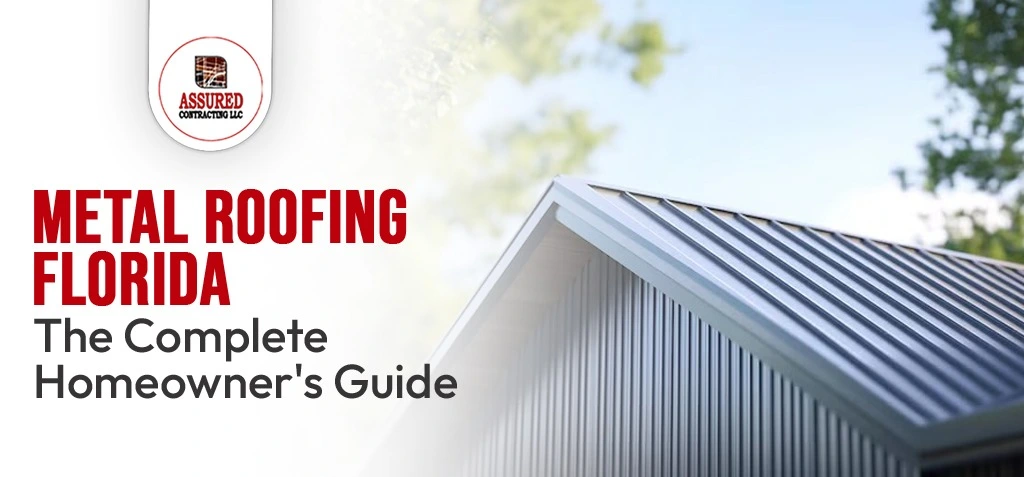
Vertical panels with concealed fasteners and raised interlocking seams. This is the system with no exposed screw heads for water to find over time, which is why it dominates in coastal and HVHZ installations.
Metal shingles or tile-profile panels
Individual panels styled to mimic shingles, slate, or barrel tile. The go-to choice in HOA communities that restrict roofline appearance but still want metal's performance.
Corrugated exposed-fastener panels
The most affordable system, common on garages, lanais, and outbuildings. Durable, but the exposed screws need re-torquing periodically, which is a maintenance detail a lot of homeowners aren't told about upfront.
Material matters as much as profile. Aluminum and galvalume steel resist salt-air corrosion far better than standard galvanized steel, which is why most reputable coastal installers won't put raw galvanized panels within a few miles of saltwater, regardless of what it saves on the quote.
What Metal Roofing Actually Costs, By Florida Region
Cost guides that quote a single statewide number are hiding the real story. Wind zone requirements change what's legally required to go on your roof, which changes the price — sometimes significantly.
| Region | Code Requirement | Typical $/sq ft Installed | Why It Costs More/Less |
|---|---|---|---|
| South FL / Miami-Dade & Broward (HVHZ) | NOA + Miami-Dade Product Approval, secondary water barrier mandatory | $13–$20 | Stricter testing, thicker gauge, more labor for permitting |
| Central FL (Orlando, Tampa, Lakeland) | FBC 7th Edition, 140–150 mph design wind speed in most counties | $10–$17 | Standard baseline pricing for most panel systems |
| Panhandle / North FL | 120–140 mph design wind speed, lower humidity load | $9–$15 | Slightly lower labor demand, still hurricane-rated |
For a typical 2,000-square-foot roof, that spread puts most Florida homeowners somewhere between $18,000 and $40,000 depending on county, panel type, and roof complexity. It's a wider range than most articles admit — because the honest answer is that your zip code is doing as much work as your material choice.
Metal vs. Shingles vs. Tile — The Comparison That Matters
| Feature | Metal Roofing | Asphalt Shingles | Concrete Tile |
|---|---|---|---|
| Typical lifespan | 40–70 years | 15–20 years | 30–50 years |
| Wind rating potential | Up to 160 mph | Up to 130 mph | Up to 150 mph |
| Weight on structure | Light | Light | Heavy — often needs a framing check |
| Heat reflectivity | High | Low | Moderate |
| Wind-mitigation discount | Highest tier | Low–Moderate | Moderate |
| Post-storm repair cost | Low–Moderate | Low | Moderate–High |
Tile performs well in wind but is brittle on impact and expensive to spot-repair — a single cracked tile often means matching an entire discontinued batch. Metal gives comparable or better wind performance at roughly a third of the weight, with simpler, cheaper repairs when something does go wrong.
Call Now!
954-652-1098The Insurance Discount Almost Nobody Explains Properly
Florida law requires insurers to offer wind-mitigation credits, but the size of the discount depends on specific, inspectable features — not just "having a metal roof." A licensed inspector evaluates:
- Roof covering type and its product approval rating
- Roof deck attachment method (nail pattern and spacing)
- Roof-to-wall connection type (clips, straps, or toe-nails)
- Secondary water barrier presence
- Roof shape (hip roofs generally score better than gable roofs)
A standing seam roof installed with the strongest deck attachment and a documented secondary water barrier can land in the top wind-mitigation credit tier — sometimes cutting a windstorm premium by 20–40%. A metal roof installed without those details documented on the inspection form can miss out on most of that savings, even though the panels themselves are identical. Ask your contractor to provide the paperwork needed for the wind-mitigation inspection before the crew leaves — not weeks later.
12 Questions Worth Asking Before You Sign Anything
This is the section most roofing content skips, and it's the one that actually protects your money.
- Is your Miami-Dade NOA or Florida Product Approval number for this specific panel — can I see it in writing?
- What gauge metal are you quoting, and is that written into the contract, not just mentioned verbally?
- Concealed or exposed fasteners — and why do you recommend that system for my roof specifically?
- What underlayment are you using, and does it meet the secondary water barrier requirement for wind-mitigation credit?
- Who pulls the permit — you or a subcontractor — and can I see the permit number once it's filed?
- What's the paint/finish system — polyester or PVDF (Kynar-based)?
- What's covered under the manufacturer's warranty versus your workmanship warranty, and for how long?
- How do you flash penetrations — vents, skylights, chimneys — and can I see photos from a past job?
- What happens to my old roofing material — is disposal included in the quote?
- Will you provide the wind-mitigation inspection paperwork after installation?
- What's your projected timeline, and what happens if weather delays the tear-off mid-project?
- Can I get three references from installs completed at least two years ago — not last month?
Red Flags That Should End the Conversation
- A quote that's dramatically lower than every other bid with no explanation for the gap
- Reluctance to pull a permit, or suggesting you "don't really need one"
- No physical local address or a P.O. box as the only listed location
- Pressure to sign same-day, especially right after a storm
- Payment demanded in full before any work begins
- Vague answers about panel gauge, fastening method, or product approval numbers
WHY THIS MATTERS
Skipping the permit doesn't just risk a fine — it can void your wind-mitigation
insurance discount and your manufacturer's warranty entirely, since both typically
require documented, inspected installation.
Maintenance: The Realistic Version
Metal roofing is low-maintenance, not no-maintenance. A realistic yearly routine looks like this:
- A visual inspection before and after hurricane season
- Clearing debris from valleys and gutters so water doesn't pool at seams
- Checking sealant at penetrations — vents, skylights, flashing — every couple of years
- Rinsing accumulated salt spray if you're within a few miles of the coast
- A professional inspection after any named storm, even without visible damage
That last point is where most damage claims start. Wind can lift a seam edge or loosen a fastener without leaving anything obvious from the ground, and a small gap left unaddressed becomes an interior leak within a few storms. If you want that checked properly, Central Florida's roof repair specialists routinely handle exactly this kind of post-storm diagnostic work — catching small issues before they turn into ceiling repairs.
Busting the Myths That Still Follow Metal Roofing Around
"It's loud when it rains."
Only true without a solid deck and underlayment beneath it — which is standard on every modern install. Sound-dampening synthetic underlayment makes metal roofs comparable to shingles in a storm, not louder.
"It attracts lightning."
Metal doesn't draw a strike any more than other materials do. Being non-combustible, it's actually a safer material to have on your roof if lightning is a concern, since it disperses charge rather than igniting.
"It dents in every hailstorm."
26-gauge or heavier panels carrying a Class 4 impact rating hold up well against the smaller hail typical of Florida storms, which rarely matches the size seen in Midwest hail corridors.
"It only looks industrial."
Wood-look, slate-look, and tile-profile finishes in a wide color range mean metal now fits coastal, Mediterranean, and traditional Florida architecture as naturally as shingles ever did.
Warning Signs You Need a Repair — Not Necessarily a Full Roof
- Rust spots or streaking forming around fasteners or seams
- Panel edges that feel loose or visibly lift in wind
- Ceiling stains or attic moisture after a storm
- Visible gaps in flashing around chimneys, vents, or skylights
- A sudden spike in attic temperature or a musty smell indoors
None of those automatically mean a full tear-off. Most start as a targeted repair, and catching them early is almost always cheaper than waiting. Assured Contracting's roof repair team in Central Florida can tell you honestly, after a real inspection, whether a repair or a replacement makes more sense for your specific roof.
Where This Leaves You
Florida doesn't give a roof much room for error, and the material you choose ends up shaping your insurance bill, your energy costs, and how many times you'll go through this whole process again before you're done owning the house. Metal roofing checks more of those boxes than almost anything else on the market — but the panel itself is only half the equation. The installation details, the permit paperwork, and the contractor's willingness to answer the twelve questions above are what actually determine whether you get a 50-year roof or a five-year problem.
If you're weighing panel systems, comparing quotes, or just want a straight answer from a crew that installs in this exact climate, it's worth talking to a team with genuine local experience in metal roofing for Oakland Park, FL homes before you commit to a contract.