Impact Windows vs. Hurricane Shutters: Which Offers Better Protection?
A straight, no-sales-pitch comparison for Florida homeowners deciding between the two before the next storm season
QUICK ANSWER
Impact windows generally offer better overall protection than hurricane shutters because
they're permanently installed, engineered to resist wind-borne debris at all times,
and don't rely on anyone remembering to deploy them before a storm. Hurricane shutters
can match or exceed impact windows in raw wind resistance when properly closed,
but only work if they're actually installed in time — which makes impact windows
the more reliable, lower-effort choice for most homeowners, while shutters remain
a lower-cost option for those on a tighter budget.
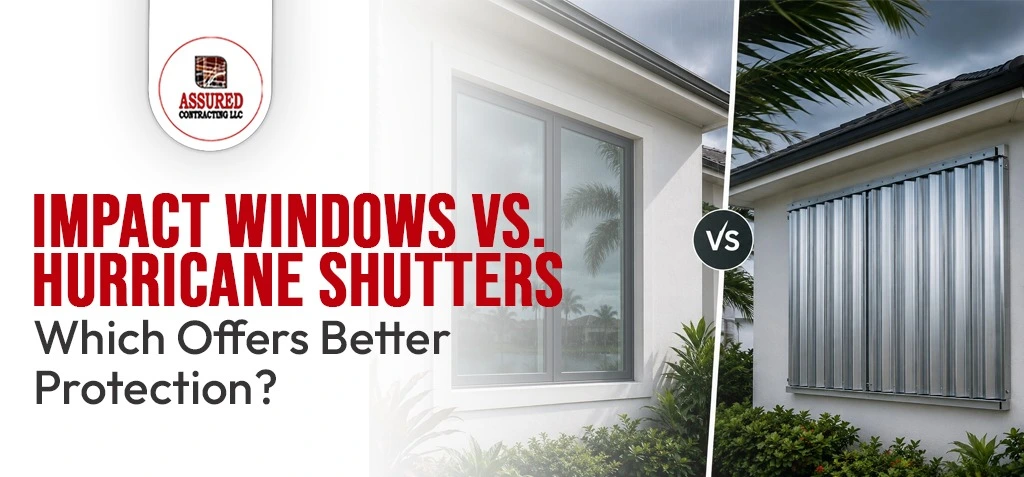
If you live anywhere near Florida's coast, this isn't a hypothetical question — it's one you'll eventually have to answer with a hurricane bearing down and a limited window to act. Both impact windows and hurricane shutters are built to keep wind-borne debris from breaching your home, but they protect you in very different ways, and the right choice depends on your budget, your home, and how much you want to think about storm prep every single season.
This guide breaks down exactly how each option performs, what they actually cost over time, and which one makes more sense for your situation — without the sales pitch you'll get from a single-product installer.
The Short Version
| Factor | Impact Windows | Hurricane Shutters | Edge |
|---|---|---|---|
| Protection level | Permanent, engineered glass — always active | Strong, but only if deployed correctly before landfall | Impact Windows |
| Deployment effort | None — always installed | Manual or motorized setup required every storm | Impact Windows |
| Upfront cost | Higher ($$$–$$$$) | Lower ($–$$$) | Shutters |
| Daily usability | Full natural light, unobstructed views, year-round | Blocks light only when closed; some types affect views permanently | Impact Windows |
| Noise reduction | Significant, everyday benefit | None day-to-day | Impact Windows |
| Energy efficiency | Improves insulation year-round | No daily energy benefit | Impact Windows |
| Home value / resale | Adds real, appraised value | Modest value, seen as a add-on | Impact Windows |
| Security against break-ins | High, permanent | High only when closed | Impact Windows |
| Insurance credit potential | Strong, consistent | Varies by type and rating | Impact Windows |
| Maintenance | Minimal | Tracks, motors, panels need upkeep | Impact Windows |
The table above covers the broad strokes, but the details matter more than the summary — especially the parts about deployment reliability and what happens when a storm forms faster than expected.
How Impact Windows Actually Work
Impact windows use laminated glass — two or more panes bonded to an interlayer, usually PVB or SentryGlas — set inside a reinforced frame. When debris strikes the glass, it can crack, but the interlayer holds the pieces together instead of letting them shatter inward. The frame and seal are engineered to stay intact under the pressure changes a hurricane creates, which is often what actually causes a window to fail, not just the impact itself.
Because they're permanently part of the window opening, impact windows are doing their job 365 days a year, whether or not anyone remembers there's a storm coming. That's the core advantage: protection that doesn't depend on human timing.
How Hurricane Shutters Actually Work
Hurricane shutters are a physical barrier — metal, polycarbonate, or aluminum — that gets closed over the window opening before a storm. They come in a few common forms, each with a different balance of cost, convenience, and protection:
| Shutter Type | How It Works | Typical Cost | Trade-Off |
|---|---|---|---|
| Accordion shutters | Fold out and lock from a permanent side track | $$ | Fast to close, but visible and mounted year-round |
| Roll-down shutters | Motorized or crank-operated, roll down from a housing above the window | $$$ | Very convenient, but highest shutter cost and needs power backup |
| Storm/removable panels | Bolted on manually before a storm | $ | Cheapest option, but heavy, slow, and needs two people to install |
| Bahama & colonial shutters | Decorative, hinged shutters that also close for storms | $$$ | Great curb appeal, but lower wind ratings than accordion or roll-down |
When properly rated and correctly closed, shutters can meet or exceed the same wind-borne debris standards as impact windows. The catch is the word "closed." A shutter provides zero protection sitting open, and Florida has seen storms intensify from a moderate system to a major hurricane in under 48 hours — not always enough time for panels to get located, hauled out, and bolted on for every window in the house.
Head-to-Head: The Factors That Actually Decide This
1. Reliability When It Matters Most
This is the single biggest difference between the two. Impact windows require zero action in the hours before a storm — they're already protecting the opening. Shutters require someone to physically deploy them, which becomes a real problem during a fast-forming storm, a family vacation, a rental property nobody's checked in weeks, or simply when you're exhausted after a full day of last-minute prep and still have six more windows to cover.
2. Everyday Livability
Impact windows work exactly like normal windows — full light, full view, opened and closed like any other day — because the protection is built into the glass itself, not a separate barrier. Shutters, once closed, block all natural light and outside visibility. Even when open, permanently mounted styles like accordion shutters remain visible on the exterior of the home year-round.
3. Noise and Energy Performance
Laminated glass in impact windows blocks a meaningful amount of outside noise and improves insulation against Florida's heat, which can measurably lower cooling costs. Shutters offer no daily insulation or noise benefit at all — their entire function is storm-specific.
4. Total Cost Over Time
Shutters cost less upfront, sometimes significantly so, especially with basic storm panels. But impact windows replace a cost you were going to pay anyway — you need windows regardless — while adding storm protection, energy savings, and noise reduction on top of that. Shutters are an added cost stacked on top of standard windows, plus periodic maintenance on tracks, motors, or hardware.
5. Insurance Discounts
Florida insurers offer wind-mitigation credits for both options, but impact windows tend to qualify more consistently across policies because the protection is inherent and doesn't depend on deployment. Shutters can still earn credits, but the discount is often tied to the specific product rating and correct installation — worth confirming with your insurer before assuming the savings.
6. Home Value
- Impact windows are typically counted as a permanent home upgrade by appraisers, similar to a renovated kitchen or new roof.
- Shutters are usually viewed as a valuable add-on, but carry less weight in an appraisal since they're a supplementary system rather than a structural upgrade.
- Buyers in hurricane-prone markets increasingly ask about impact glass specifically, the same way they ask about roof age.
7. Security Beyond Storms
Impact windows are also significantly harder to break into than standard glass, offering a year-round security benefit that has nothing to do with hurricane season. Shutters only provide that same security when closed, which most homeowners aren't doing on a random Tuesday in June.
WORTH KNOWING
Some Florida homeowners combine both — impact windows on the main living areas for
daily comfort and security, with shutters reserved for oversized openings like
sliding glass doors or a lanai, where full impact-rated glass can get expensive
fast. It's not always an all-or-nothing decision.
Call Now!
954-652-1098What This Costs in Real Numbers
Pricing varies by window size, glass rating, and how many openings your home has, but as a general range:
- Storm panels: roughly $10–$25 per square foot of coverage, installed only when needed
- Accordion or roll-down shutters: roughly $20–$45 per square foot, permanently mounted
- Impact windows: roughly $40–$70 per square foot, replacing the window itself
The comparison isn't quite apples to apples, though — impact windows replace a purchase you'll eventually make anyway, while shutters are added entirely on top of your existing windows. When you factor in energy savings, noise reduction, and insurance credits over a 15–20 year window lifespan, the gap between the two narrows considerably.
Which One Is Right for Your Home?
There's no universal right answer, but a few honest guidelines help:
- Choose impact windows if you want protection that never depends on timing, you're already planning to replace aging windows, or you want the noise, energy, and security benefits every single day — not just during storm season.
- Choose hurricane shutters if your budget is tight right now, your windows are relatively new and don't need replacing, or you want strong protection for select high-risk openings like sliders and large glass doors.
- Choose a hybrid approach if you want impact glass on your primary living spaces and shutters on oversized or secondary openings where full impact glass isn't cost-effective yet.
The Bottom Line
Both impact windows and hurricane shutters can protect your home from wind-borne debris when they're properly rated and correctly installed. The real difference comes down to reliability and daily life: impact windows protect your home whether or not you're home to prepare, while shutters ask you to get it right, on time, every single storm. If low-effort, year-round protection matters more to you than upfront savings, impact windows are the stronger long-term investment — and if budget is the deciding factor right now, well-installed shutters are still a legitimate, code-compliant way to protect your home.
Whichever direction makes sense for your home, getting the installation right is what actually determines how well either system performs in a real storm. Assured Contracting, LLC has handled both impact glass and shutter installations across Florida long enough to know exactly which products hold up in this climate and which ones just look good on a spec sheet. If you're ready to compare options for your own home, it's worth talking to their team about impact window installation in Oakland Park, FL before the next storm season puts your current setup to the test.