Hurricane-Proof Upgrades for South Florida Homes: The Complete Guide
QUICK ANSWER
The most effective hurricane-proof upgrades for South Florida homes are impact-rated
windows and doors, a wind-rated roof system, reinforced garage doors, and secured
soffits/gable ends. Together, these upgrades protect a home's "envelope" — the roof,
walls, and openings — from wind and water intrusion, and can qualify homeowners for
Florida wind-mitigation insurance discounts. Most South Florida homeowners start
with the roof, then move to windows and doors, since these three systems account
for the majority of storm damage claims.
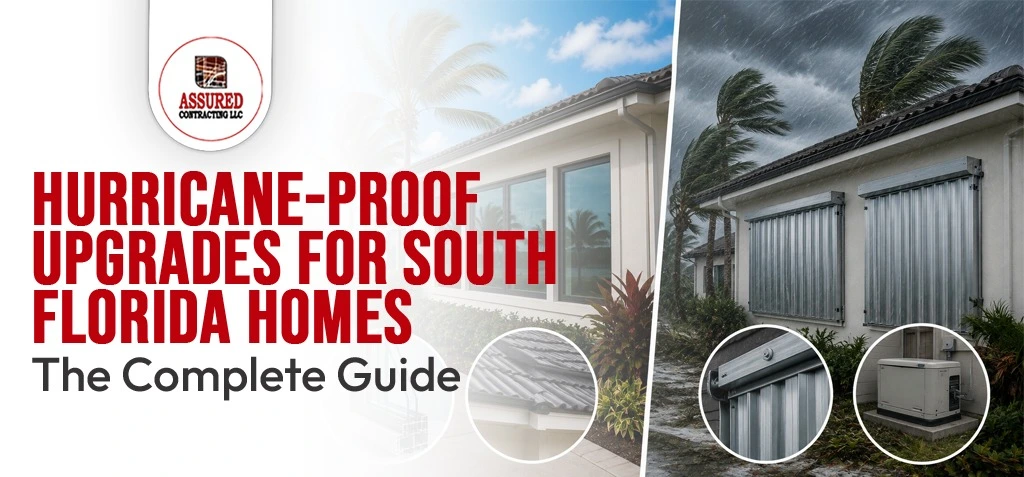
South Florida homes face a level of wind, rain, and storm-surge exposure that most of the country never experiences. Every June through November, homeowners from Broward to Palm Beach County ask the same question: is my house actually ready for the next storm? The honest answer, for most homes built before the mid-2000s (and even some built after), is usually no — not without targeted upgrades. This guide breaks down exactly which upgrades matter most, how Florida's building code affects your decisions, what they cost, and how they pay you back through insurance savings and resale value.
Why Hurricane-Proof Upgrades Matter More in South Florida Than Anywhere Else in the U.S.
South Florida sits inside what building officials call the High-Velocity Hurricane Zone (HVHZ), which covers Miami-Dade and Broward counties and carries the strictest wind-load and impact-resistance requirements in the country. Palm Beach and the surrounding counties fall just outside the official HVHZ line but are still governed by wind-borne debris region rules under the Florida Building Code, meaning most of the same protections apply in practice.
This isn't bureaucratic caution. Hurricanes Irma, Michael, Ian, and Milton each demonstrated the same pattern: homes with older single-pane windows, unrated garage doors, and aging shingle roofs suffered the most severe damage, while homes with impact-rated openings and wind-rated roofing systems came through with minor or no damage at all. Insurance adjusters see this pattern every season, which is exactly why Florida ties insurance pricing to a home's wind-mitigation features.
How Florida Building Code Affects Your Upgrade Decisions
Any exterior work on a South Florida home — roofing, windows, doors, or garage doors — has to meet current Florida Building Code wind-load requirements, not the code that was in effect when the house was originally built. This is a common surprise for homeowners: you can't simply replace a window with "the same thing." The replacement has to be rated for your address's specific wind zone, which in most of Broward and Palm Beach County means products tested to withstand large-missile impact and sustained high winds.
This is also where a lot of homeowners run into trouble with unlicensed or out-of-area contractors who pull the wrong permit, use a lower wind-rated product than the code requires, or skip the required product approval documentation entirely. That paperwork matters twice: once for your permit closeout, and again when your insurance carrier requests wind-mitigation proof for your discount.
The Highest-Impact Hurricane-Proof Upgrades for South Florida Homes
Not every upgrade delivers the same return. Based on claims data and wind-mitigation inspection reports, these are the upgrades that make the biggest difference to how a South Florida home performs in a storm — ranked in the order most contractors recommend tackling them.
1. A Wind-Rated Roof System
The roof is a home's first line of defense, and it's also the system most likely to fail first in older homes. Wind-rated roofing includes sealed roof decking (secondary water barrier), enhanced nailing or screw patterns, and shingles or tiles rated for your wind zone. A roof that lifts even partially during a storm exposes the entire interior of the home to wind-driven rain, which is responsible for the majority of hurricane-related interior damage claims — far more than most homeowners expect.
If your roof is more than 12–15 years old, or you're not sure whether it has a secondary water barrier, it's worth having it evaluated before storm season. Assured Contracting, LLC's roof repair and replacement team in Central Florida inspects roofs specifically for wind-mitigation compliance and can walk you through repair versus full replacement based on the age and condition of your existing system.
2. Impact-Rated Windows
Standard windows are the single most common failure point in older South Florida homes. Once wind-borne debris breaches a window, internal pressure spikes and can blow out the roof from the inside — a chain reaction that turns a minor breach into total structural failure. Impact windows use laminated glass, similar in principle to a car windshield, so the glass can crack under impact without creating an opening.
Beyond storm protection, impact windows also reduce outside noise, block nearly all UV transmission, and lower cooling costs — a meaningful bonus in South Florida's climate. Assured Contracting, LLC's hurricane impact window installation team in Oakland Park handles both new installations and code-compliant replacements, with product documentation ready for your insurance wind-mitigation report.
3. Impact-Rated Entry and Patio Doors
Front doors, French doors, and sliding glass doors face the same wind-borne debris risk as windows, but they're frequently overlooked because homeowners focus on windows first. A single non-rated sliding door or entry door can undermine the protection provided by every impact window in the house, since it takes only one failure point for internal pressure to build.
For full protection, doors need to be rated to match the same wind zone as the rest of the home's openings. Assured Contracting, LLC's hurricane impact door installation services in Oakland Park cover entry doors, French doors, and sliding glass doors, installed and permitted to current Florida Building Code standards.
4. Reinforced or Wind-Rated Garage Doors
Garage doors are large, lightweight, and structurally vulnerable — engineering studies consistently identify garage door failure as one of the leading causes of catastrophic wind damage in residential hurricanes, because a failed garage door lets wind pressurize the entire structure from inside. Wind-rated garage doors, or aftermarket bracing kits for existing doors, are one of the more affordable upgrades on this list relative to the protection they provide.
5. Secured Soffits and Gable-End Bracing
Soffits (the panels under your roof overhang) are a frequently missed vulnerability. Older, poorly fastened soffit panels can pull loose in sustained wind, allowing rain to enter the attic and roof structure even when the roof itself holds. Gable-end bracing reinforces the triangular wall section at the roofline, which is prone to collapse in high-wind events on older homes.
6. A Whole-Home or Standby Generator
This isn't a structural upgrade, but it belongs on the list. Extended power outages after a storm create their own risks — spoiled medication, non-functioning sump pumps, and unsafe conditions for elderly residents or anyone with medical equipment. A properly sized standby generator, installed with an automatic transfer switch, keeps essential systems running without the safety risks of portable generators.
How Hurricane-Proof Upgrades Affect Your Insurance Premium
Florida law requires insurers to offer wind-mitigation discounts, and the savings can be significant enough to offset upgrade costs over a few years. Insurers use a standardized wind-mitigation inspection form that scores your home on the exact features covered above: roof shape, roof deck attachment, roof-to-wall connections, secondary water barrier, and opening protection (windows, doors, and garage doors).
| Upgrade | Typical Insurance Impact | Priority Level |
|---|---|---|
| Wind-rated roof + secondary water barrier | Often the single largest discount factor | High |
| Impact windows (whole-home) | Meaningful discount on the "opening protection" credit | High |
| Impact doors (entry + sliding) | Required alongside windows for full opening-protection credit | High |
| Reinforced garage door | Improves opening-protection score | Medium |
| Roof-to-wall connections (clips/straps) | Scored directly on the wind-mit form | Medium |
| Standby generator | No direct premium effect; reduces post-storm loss | Optional |
Exact discount percentages vary by insurer and are set individually by each carrier, so the table above reflects general patterns rather than guaranteed figures. Ask your insurance agent for a copy of the wind-mitigation inspection form so you can see exactly which features affect your premium before you plan your upgrade order.
Call Now!
954-652-1098When to Schedule Hurricane-Proof Upgrades
Timing matters more than most homeowners realize. Permitting, product lead times, and contractor scheduling all get significantly harder as hurricane season approaches.
- December – March: Best window for scheduling roof, window, and door replacements. Permit turnaround is faster and contractor calendars are open.
- April – May: Still workable, but book at least 6–8 weeks out — impact window and door lead times often run 4–10 weeks depending on size and configuration.
- June – November (hurricane season): Expect longer lead times and limited emergency availability. This is the season to have repairs and inspections done quickly, not to start a full upgrade plan from scratch.
What to Look for in a Hurricane-Proof Upgrade Contractor
South Florida's storm-recovery cycles unfortunately attract a wave of unlicensed and out-of-state contractors after every major hurricane. Before signing a contract for roofing, windows, or doors, confirm the following:
- Active Florida contractor license (verify on the Florida DBPR license lookup).
- General liability and workers' compensation insurance, with certificates provided in writing.
- Pulls its own permits with your local building department — never asks you to pull an owner-builder permit for work it performs.
- Uses products with current Florida Product Approval (FL#) or Miami-Dade NOA listings matching your wind zone.
- Provides a written wind-mitigation-ready invoice and product documentation for your insurance carrier.
Assured Contracting, LLC is a licensed and insured general contractor serving South Florida homeowners with roofing, impact windows, and impact doors — each project permitted, documented, and installed to current Florida Building Code wind-zone requirements, with the paperwork you need ready for your insurance wind-mitigation inspection.
Start Before the Next Storm, Not After It
Every hurricane season, the same pattern repeats: homeowners who upgraded their roof, windows, and doors in advance ride out the storm with minor or no damage, while homeowners who delayed face far more expensive repairs — and a much longer wait for a contractor once the season begins. The upgrades outlined in this guide, in the order presented, give South Florida homeowners the strongest return on protection, insurance savings, and long-term home value.
Assured Contracting, LLC helps South Florida homeowners plan and install these upgrades correctly the first time — from roof assessment to impact window and door installation — with full permitting and documentation for your insurance carrier. Reach out before the next storm season window closes.