Flat Roofs in Florida
The Complete Homeowner's Guide
What holds up, what fails fast, and what a flat roof should really cost in Florida's climate
QUICK ANSWER
Flat roofs in Florida work best when built with TPO or PVC single-ply membranes
over tapered insulation that directs water to drains at roughly a quarter-inch of
slope per foot. The biggest cause of failure isn't the material — it's ponding water
sitting on a roof that wasn't sloped or drained correctly. A properly installed flat
roof in Florida typically lasts 15–25 years and costs $6–$12 per square foot installed.
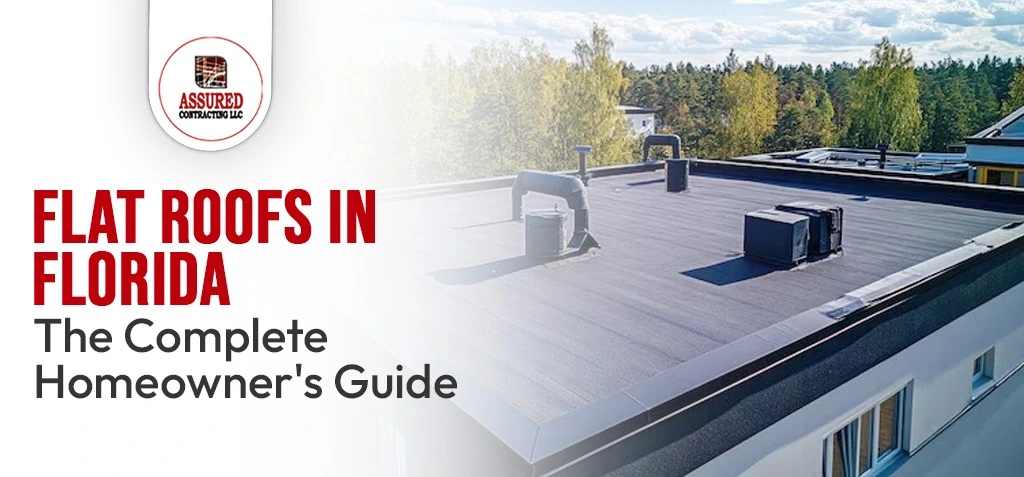
Flat roofs in Florida show up everywhere — mid-century homes in St. Pete and Sarasota, additions and lanais across Central Florida, and most commercial buildings statewide. But a flat roof in Florida has to solve a problem sloped roofs don't: where does 60+ inches of annual rainfall actually go when there's no pitch to move it? That single question decides whether a flat roof lasts 25 years or leaks within three. This guide covers what actually works, what a flat roof should cost by material, and the maintenance and drainage details most homeowners never hear about until something's already leaking.
What Counts as a "Flat Roof" in Florida?
Almost no flat roof is perfectly flat — "low-slope" is the more accurate term, and Florida building code requires a minimum slope (typically ¼ inch per foot) specifically so water has somewhere to go. True flat roofs are found on additions, lanai covers, garages, and older mid-century homes; low-slope membrane systems are the standard on most modern flat-roofed construction, both residential and commercial.
The distinction matters because it's the difference between a roof engineered to shed water and one that simply collects it — and in a state that gets more rain than Seattle, that engineering decision determines everything else about how the roof performs.
Why So Many Florida Homes and Buildings Have Flat Roofs
- Mid-century modern and ranch-style homes built in the 1950s–70s across Central and South Florida were designed with low-slope rooflines as a signature style feature
- Additions, lanais, and garage extensions are usually built flat because tying a pitched roof into the existing roofline is often impractical
- Commercial and multi-family buildings almost universally use flat/low-slope membrane roofing for cost and rooftop equipment access
- Flat roofs make room for usable rooftop space — AC units, solar arrays, or rooftop decks — that a pitched roof can't offer
The Real Challenge: Florida's Climate Doesn't Forgive Bad Drainage
Every flat roof problem in Florida traces back to one of three things: standing water, UV breakdown, or seam failure — and all three get worse in this climate faster than almost anywhere else in the country.
Ponding water
Any area holding water more than 48 hours after rainfall is considered "ponding," and Florida's frequent, heavy rain events make this the single most common flat roof failure point in the state. Ponding accelerates membrane breakdown, adds enormous structural weight, and creates the exact conditions algae and mold need to take hold.
UV and heat breakdown
A dark flat roof surface in direct Florida sun can reach 150–180°F on a summer afternoon. That heat cycle — baking all day, cooling fast in an afternoon storm — stresses membrane seams and adhesives far more aggressively than in milder climates.
Seam and flashing failure
Flat roofs don't fail in the field of the membrane nearly as often as they fail at the seams, edges, and penetrations — vent pipes, AC curbs, parapet walls. Wind-driven rain during Florida's frequent thunderstorms finds these weak points fast.
LOCAL INSIGHT
A flat roof that's five years old and already showing dark stains or soft
spots almost always has a drainage problem, not a material problem.
Re-membraning without fixing the slope or drains just buys a few more
years before the same failure repeats.
Best Flat Roof Materials for Florida — Compared
| Material | Best For | Lifespan | Heat Resistance | Cost/sq ft |
|---|---|---|---|---|
| TPO (single-ply) | Most residential flat/low-slope roofs | 15–25 yrs | High (reflective white) | $6–$9 |
| PVC (single-ply) | High heat + chemical exposure areas | 20–30 yrs | High | $8–$12 |
| Modified Bitumen | Additions, older homes, budget re-roofs | 15–20 yrs | Moderate | $5–$8 |
| EPDM (rubber) | Simple low-slope sections, sheds/additions | 15–25 yrs | Low (black surface) | $5–$8 |
| Spray Foam + Coating | Irregular roofs, added insulation value | 20–25 yrs* | Very High | $7–$11 |
| Built-Up Roof (BUR) | Older Florida homes, multi-layer redundancy | 20–30 yrs | Moderate | $6–$10 |
*Spray foam roofs need a recoat every 10–15 years to maintain UV protection — factor that into lifetime cost, since the foam itself can last decades but the coating is what's actually doing the weatherproofing.
For most Florida homes, TPO has become the default recommendation — it welds into fully sealed seams (rather than being glued or taped), reflects heat well enough to noticeably reduce attic temperatures, and holds up to humidity without the maintenance PVC or built-up systems demand. PVC pulls ahead only when there's added chemical or grease exposure, like above a kitchen exhaust.
Call Now!
954-652-1098What a Flat Roof Actually Costs in Florida
Material is only part of the number. A flat roof quote should also reflect tear-off, deck repair, tapered insulation to correct slope, drain or scupper work, and flashing at every parapet and penetration. As a general range for a full flat roof replacement:
- Small sections (lanai, garage, addition): $2,000–$6,000 total
- Full residential flat roof (1,500–2,500 sq ft): $10,000–$28,000
- Adding tapered insulation to fix chronic ponding: +$1.50–$3.50 per sq ft
A quote that's dramatically cheaper than everything else is almost always skipping tapered insulation or proper drain work — which means you're paying less today to guarantee a ponding problem in year three.
How Long Does a Flat Roof Actually Last in Florida?
Under ideal conditions, most single-ply membrane systems are rated for 20–30 years by the manufacturer. In practice, Florida's heat and rain cut that down — 15–25 years is the realistic range for most homes, and roofs with drainage problems or poor installation can fail in under 10. The single biggest factor isn't the brand of membrane — it's whether the roof was sloped and drained correctly on day one.
A Realistic Flat Roof Maintenance Checklist
- Clear debris from drains and scuppers every few months — clogged drains are the #1 cause of preventable ponding
- Walk the roof after major storms looking for blistering, bubbling, or torn seams
- Check flashing at every penetration — AC curbs, vent pipes, parapet walls — twice a year
- Recoat reflective or foam roofs on the manufacturer's schedule, typically every 10–15 years
- Address any ponding lasting more than 48 hours immediately, not at the next scheduled inspection
If your flat roof is holding water, showing dark streaking, or you've noticed a soft spot underfoot, it's worth having it looked at before the next storm rather than after. Assured Contracting's roof repair team in Central Florida regularly diagnoses exactly this kind of flat roof drainage and membrane issue, and can tell you clearly whether it's a patch, a re-coat, or a full re-membrane situation.
Questions to Ask a Flat Roof Contractor Before You Sign
- Are you installing tapered insulation to correct slope, or matching the existing (possibly flawed) slope?
- What's the membrane thickness (mil rating), and is that specified in the written contract?
- Are seams heat-welded, glued, or taped — and what's the warranty difference between those methods?
- How are you handling the drains, scuppers, or gutters — are they being replaced or reused?
- What's the plan for flashing at every parapet wall, curb, and penetration?
- Is the membrane rated for foot traffic if the roof will be walked on for AC servicing?
- What's the manufacturer's warranty length, and does it require their own certified installer?
- Can I see photos of a similar flat roof job you completed at least two years ago?
Signs You Need a Flat Roof Repair Now — Not Later
- Water pooling anywhere more than 48 hours after rain stops
- Bubbling, blistering, or a soft, spongy feel underfoot
- Visible cracks or separation at seams and flashing
- Interior ceiling stains, especially near walls or AC units
- A musty smell or visible mold on the underside of the roof deck
Every one of those is cheaper to fix at the first sign than after another rainy season. Central Florida's roof repair specialists can inspect the membrane, the drains, and the flashing together — because on a flat roof, those three things fail as a system, not one at a time.
Bottom Line
Flat roofs in Florida aren't inherently riskier than pitched roofs — they're just less forgiving of shortcuts. Slope, drainage, and seam quality matter more here than almost anywhere else in the country, because the state gives a poorly built flat roof every opportunity to fail: heavy rain, intense heat, and hurricane-force wind, often in the same season. Get the drainage right, choose a membrane suited to Florida's heat, and a flat roof will comfortably outlast the mortgage on the addition it's covering.
If you're dealing with ponding water, a suspected leak, or just want an honest read on the condition of your flat roof, it's worth getting a real inspection from a team that repairs flat roofs across Central Florida every week rather than guessing based on what you can see from a ladder.